
Det här inlägget kan innehålla affiliate-länkar. Vi kan tjäna pengar eller produkter från företagen som nämns i det här inlägget.
 © Depositphotos.com / jeanro
 Jag tror att du håller med mig när jag säger:
En av de första och viktigaste sakerna du måste lära dig som ny ägare är hur man hustränar en valp...och snabbt!
Tja, det visar sig att du dramatiskt kan minska tiden det tar att husträna din valp, ta dig igenom dagarna med renare golv och mattor mycket tidigare, genom att beväpna dig med bara lite kunskap och följa en välplanerad plan.
Och i den här artikeln ger jag dig en detaljerad steg-för-steg-metod att följa som kommer att få ditt valphus utbildat på snabbast möjliga tid, med minsta möjliga "olyckor", röran och städning längs vägen.
Jag lovar inget "magiskt piller ' eller 'hemlig träningshemlighet "som kommer att träna ditt valphus om en vecka. Det finns ingen sådan hemlighet och tiden det tar kommer att skilja sig från valp till valp och ägare till ägare.
Men vad jag erbjuder är en omfattande guide, skriven från otaliga timmar av forskning och min egen träningserfarenhet som har lärt mig vad som fungerar och inte fungerar.
Om du följer den här guiden med tålamod, konsekvent och engagemang kan jag garantera att du kommer att ta både din valp och dig själv från nybörjare till träningsess så snabbt och stressfritt som möjligt.
SNABBTIPS: För att minska antalet olyckor i ditt hus vill du vara säker på att du tar bort lukten av urin noggrant. Vi rekommenderar ett enzymrengöringsmedel som Puppy In Training Stain &Odor Eliminator.
"Hur man hustränar en valp ' är den 11:e artikeln i min 'Ultimate Guide To House Training'-serie.
De föregående 10 artiklarna innehåller en mängd stödjande information som svarar på många av de vanligaste frågorna om husträning och ger dig kunskap för att fatta välgrundade beslut om metoden och stilen för potträning du kommer att följa.
Jag har dock medvetet gjort det här "hur man gör guide så komplett och fristående som möjligt, så det är inte nödvändigt att läsa de tidigare artiklarna.
Jag upprepar den viktigaste informationen här i mindre detalj, länka sedan till dessa artiklar om du vill ha mer detaljerad läsning och djupare förståelse.
För att använda den här guiden rekommenderar jag att du läser den en gång i sin helhet från början till slut, sedan har du täckt allt du behöver veta för att framgångsrikt husträna en valp.
Jag varnar dig, den här artikeln är lång. Väldigt lång. Det kommer förmodligen att ta dig 15 minuter att läsa. Men det du kommer att lära dig, det bästa sättet att husträna en valp så snabbt som möjligt, kommer att betala tillbaka den tid du investerat hundratals gånger om under de första veckorna och månaderna med din valp.
Och om du bokmärker den här guiden kan du använda den som referens genom att klicka i innehållsförteckningen ovan för att ta dig direkt till valfri sektion om du behöver fräscha upp ditt minne om ett visst ämne.
Så låt oss börja...
SNABB REKOMMENDATION: Ett annat verktyg vi älskar för hemmaträning är hundpottdörrklockan, Smart Bell. Det kräver lite träning, Smart Bell varnar dig när din valp måste potta och den är också bra när du arbetar med signalen "Touch".
Vid 8 veckor gammal vet en valp inte bättre än att gråta eller bajsa absolut var som helst där den råkar stå när lusten slår till.
De har ingen aning om att det inte är så det ska göras eller att du inte tycker att det är acceptabelt att potta på dina mattor.
Det är upp till dig att välja en lämplig badrumsplats, träna din valp att använda den och samtidigt lära dem att det inte är acceptabelt att potta någon annanstans i ditt hem.
För att uppnå detta finns det två viktiga nycklar till framgång. 2 nycklar som är det yttersta målet med vilken metod eller teknik du någonsin kommer att stöta på:
En stor del av att uppnå detta är helt enkelt att ta din valp till sin utsedda toalettplats ofta.
På så sätt får du det största antalet möjligheter att berömma dem för att de gör rätt. Och eftersom de är tomma minskar du också deras behov av att potta när de är på fel ställen.
Men det är inte så enkelt som bara detta. Du ska också förebygga misstag i ditt hem genom en blandning av instängdhet och koncentrerad tillsyn. Och anpassa denna dygnet runt-uppgift till din nuvarande livsstil och dina rutiner.
Att göra detta är både en konst och en vetenskap, som kräver ett genomtänkt och välplanerat tillvägagångssätt för att ge din valp största möjliga chans att göra rätt sak, samtidigt som möjligheterna att göra fel saker begränsas.
Och den här guiden visar dig exakt hur.
Hur länge kan en valp hålla sin blåsa? Hur många gånger behöver en valp potta varje dag? Hur lång tid kommer det att ta innan din valp är färdigtränad?
Det finns många frågor som en ägare kommer att ha när de börjar med husträning och det finns mycket desinformation skriven där ute.
Så för att svara på de vanligaste frågorna skrev jag följande artikel:Grundläggande behov av att veta fakta innan du börjar.
Jag rekommenderar att du läser den artikeln så att du har realistiska förväntningar på din valp och dig själv, för att veta vad ni båda kan uppnå inom vilken tidsram.
 © Depositphotos.com / nasirkhan
 Eftersom din valp inte har någon aning om vad du ber den att göra eller varför, är du den viktigaste delen i husträningsprocessen.
Det är upp till dig att lära dem acceptabla toalettvanor och du måste göra det på ett sätt som är så lätt för dem att förstå och så stressfritt som möjligt.
Hur du närmar dig saker kommer att ha en dramatisk effekt på hur smidigt det kommer att gå, så mycket att jag ägnade en hel artikel åt saken:The Mindset And Approach You Must Take to House Training.
I artikeln diskuterar jag traditionella metoder som aldrig bör användas, varför de inte borde och vad du bör göra istället.
Jag tar upp hur du måste ta rollen som guide och tränare, måste ha tålamod och förståelse, men ändå bestämd och konsekvent.
Jag tar upp hur du arbetar med din valps naturliga instinkter, det bästa sättet att hantera olyckor i hemmet och hur toalettträning lägger grunden för er framtida relation tillsammans.
Det är viktig läsning för alla som ska börja på ett träningsprogram i hemmet, så jag rekommenderar att du hoppar av och läser det innan du fortsätter med den här guiden.
Att begränsa din valps tillgång till ditt hem tills de kan lita på är en av de bästa sakerna du kan göra för en snabbare och renare väg till framgång.
Hundar har en instinkt att inte eliminera inne i sin håla, platsen där de äter och sover. Din uppgift är att övertyga din valp om att hela ditt hem är deras håla och att den inte ska smutsa ner någonstans inuti den.
Det här är så mycket enklare att göra om du först begränsar din valp till bara ett enda rum i ditt hem, övertygar dem om att hålla det rent först och sedan sakta utökar de områden de får komma in i.
Hundar generaliserar inte bra så även om de vet att de inte är tänkta att potta i ditt kök, kommer de inte att ta den här idén och tillämpa den på ditt sovrum.
Du måste lära dem att inte potta i ditt sovrum nästan som en separat idé.
Om du tillåter tillgång till hela ditt hem direkt, kommer din valp inte att se det som ett stort ställe, utan många separata och helt olika platser.
Men om du börjar smått, begränsar dem till och pottränar dem i ett område, och sedan expanderar bit för bit, är det lättare för din valp att associera det nya området med sitt livsutrymme som de ska hålla rent.
Detta kommer att påskynda brytningsprocessen och samtidigt minska antalet olyckor som din valp kommer att råka ut för och antalet djuprengöringar du måste göra. En vinnande situation i allas bok!
 © Depositphotos.com / tairen10
 Följande är en lista över föremål och produkter du kommer att behöva för att hjälpa dig att träna din valp på toaletten.
Vissa är viktiga, andra är valfria och vad du behöver beror på vilken metod du väljer.
Du kommer att kunna avgöra vad du behöver när du är klar med guiden och känner till din handlingsplan.
Om du vill ha en detaljerad beskrivning av hur och varför dessa föremål är så användbara, hur var och en bör användas och hur de hjälper under träning i hemmet, vänligen se min artikel:
Produkter, tillbehör och utrustning du behöver för träning i hemmet
 © Depositphotos.com / belchonock
 Vad du matar och hur du matar din valp har en otrolig inverkan på processen.
Jag har skrivit en detaljerad artikel om hur matval gör en enorm skillnad under hemmaträning som du kan läsa av klicka här.
I den finns en detaljerad diskussion om hur dina val kring mat kommer att påverka din framgång och massor av råd om hur du ska mata din valp.
Naturligtvis rekommenderar jag starkt att du läser den, sedan kan du komma tillbaka informerad och hoppa över det här avsnittet till nästa. Men för de som har ont om tid är huvudpunkterna i artikeln följande:
Mat av låg kvalitet är full av billiga fyllmedel, har lågt näringsvärde och är svårsmält vilket resulterar i att mer passerar rakt igenom.
Medan högkvalitativ mat har hög näring, lättsmält och mer absorberas vilket innebär att mindre passerar igenom.
Därför resulterar högkvalitativt foder i att din hund producerar färre avföring varje dag, vilket uppenbarligen är idealiskt vid husträning.
Eftersom en valp extraherar mer näringsämnen från högkvalitativ mat och mindre billiga fyllmedel flödar rakt igenom, blir deras avföring fastare och det hjälper dem att lära sig tarmkontroll.
Eftersom mat färdas genom din valps system i en någorlunda konsekvent takt, om du matar dem vid samma tider varje dag, kommer de att sätta sig i ett mönster av eliminering vid samma tider varje dag.
Du kan sedan basera ett schema kring dessa tider, din valp kommer att lära sig att förvänta sig en toalettpaus vid dessa tider och hemträningen blir lättare för er båda.
 © Depositphotos.com / lifeonwhite
 Om du istället för att hålla dig till strikta matningstider lämnar mat till din valp hela dagen, kan den plocka på och äta sin mat vid slumpmässiga tider.
Detta är känt som "fri-matning" och är det värsta du kan göra tills din valp känner till lämpliga toalettvanor.
Genom att äta på slumpmässiga tillfällen kommer de att behöva bajsa vid slumpmässiga tillfällen också.
Utan något regelbundet, förutsägbart mönster för när din valp behöver bajsa, blir hemmaträningen svårare.
Låt därför din valp äta enligt ett schema och hämta matskålen mellan måltiderna, oavsett om den är tömd eller inte.
Dramatiska förändringar i kosten leder mycket ofta till lös avföring eller diarré, din valp blir fysiskt oförmögen att hålla i den och detta är det värsta som kan hända under husträning (för att inte tala om all städning du måste göra! )
Välj ett enda, högkvalitativt och näringsmässigt balanserat märke av valpfoder och håll dig till det. Den som din valps uppfödare använde är vanligtvis det bästa valet så att din valp inte behöver gå igenom en förändring.
Om du behöver välja ett nytt fodermärke, eller funderar på att byta till något bättre, har vi listat några av de bästa materna för labradorvalpar och stora hundar här (öppnas i nytt fönster).
Du bör göra vatten fritt tillgängligt för din valp under hela dagen, övervaka deras intag så att du kan bedöma om den får i sig för mycket eller för lite, men begränsa inte tillgången eftersom deras behov kan variera.
Det viktiga att göra är att ta bort deras tillgång till vatten de sista 2 timmarna före sänggåendet, annars kommer de att behöva gå många gånger genom natten vilket du naturligtvis inte vill.
Hundar lockas tillbaka till platser av lukten av sin egen urin för att använda samma plats som en toalett om och om igen.
Och deras luktsinne är så angelägen att till och med det minsta lilla spår av urin räcker för att uppmuntra till en upprepad prestation.
Efter varje olycka är det därför viktigt för dig att noggrant rengöra området, ta bort alla spår av urin och dess lukt. Om du inte gör det är chansen stor att din valp kommer att göra en ny liten pöl.
Detta kan förstöra dina ansträngningar eftersom att uppmuntra dem att potta i ditt hem är raka motsatsen till vad du försöker uppnå.
Vanliga hushållsstädare gör helt enkelt inte ett tillräckligt bra jobb med att eliminera lukter så du behöver verkligen använda ett fläck- och luktborttagningsmedel speciellt utformat för ändamålet.
Och du behöver en steg-för-steg-metod att följa som garanterar resultat.
För råd om vilka rengöringsprodukter du bör välja, de du helt enkelt måste undvika, hur du hittar dolda urinfläckar (med ett UV-ljus) och en steg-för-steg-process för en snabb och grundlig rengöring, se min artikel:
Olyckor händer:Hur man tar bort djurfläckar och lukter.
Innan du börjar potträning måste du ta ett mycket viktigt beslut:Kommer din hund att ha en badrumsplats ute, inne eller kanske till och med båda? Och hur ska du bestämma dig?
Mitt råd är:Välj en utomhusbadrumsplats om du inte har en mycket god anledning att göra något annat.
Att träna en hund till toaletten uteslutande är lättare för din valp att förstå, lättare för dig att träna och snällare mot nosen.
Men om du har rörelseproblem eller bor på översta våningen i ett höghus är det omöjligt att komma ut snabbt.
Sedan måste du välja en badrumsplats i ditt hem, åtminstone tills din valp har utvecklat en stark blåskontroll.
Du kan välja en blandning av de två genom att ha din hundtoalett ute när du är där men inne på kuddar eller papper när du inte är det.
Detta är lämpligt om du måste arbeta hela dagen eller ibland måste lämna din hund ensam i många timmar.
Det är en bra idé att "pappersträna" din valp till toaletten inomhus när den är i sitt avstängningsutrymme, även om din slutliga plan är att de bara ska toaletta utomhus.
Det beror på att valpens ålder är fysiskt omöjligt för dem att hålla i blåsan i mer än ett par timmar tills de växer.
Personligen har jag alltid funnit med varje hund jag någonsin ägt att det alltid finns tillfällen då jag har varit tvungen att lämna dem ifred i 3, 4, kanske 5 timmar. Jag planerar att detta inte ska hända, men ibland händer det.
Du kan inte hålla en valp under så här lång tid, så du måste ha en reservplan. Och det är att begränsa dem till en träningspenna eller ett enda litet rum med en pappersyta så att de kan potta.
Så även om jag när jag är hemma är vaksam och mycket aktivt hemmatränar min valp till toaletten utomhus, måste jag också pappersträna dem för det udda tillfälle jag inte är hemma.
Efter att ha pratat med många vänner och ägare vet jag att detta är ett vanligt scenario för många.
Många låter sina hundar använda hela sin trädgård som toalett, bara den är ute. Men du kanske vill överväga att träna dem att använda bara en specifik plats varje gång.
Om de tillåts gå någonstans på gården är det högst troligt att du inte kommer att kunna hitta och plocka upp alla deras avföring, vilket inte är bra om du har barn som leker där, eller valp-"avsättningar" runt din fina solstol.
Du kan också upptäcka att din hunds urin orsakar "gräsbränna", där gräset blir brunt i de områden som ofta används på din gräsmatta.
Dessutom, om de regelbundet grisar nära en dörr eller under ett fönster kan det orsaka en hel del illamående att tränga igenom ditt hem, särskilt på sommaren. Men...
Om du tränar dem att använda bara en enda plats kommer din trädgård att bli renare och mer hygienisk för alla andra användare, du kommer inte ha problemet med kvävebränt gräs och det är så mycket lättare för dig att hålla din trädgård ren.
Så det är helt vettigt att träna din hund att använda ett specifikt område varje gång.
Ett område borta från dörrar, fönster, grillar eller lekplatser. Men snälla, tro inte att om du väljer en plats "ur vägen" kan du undvika städuppgifter.
Hundar gillar att gå dit de kan lukta de har varit tidigare, men det måste fortfarande vara rent. Så om du vill att de ska fortsätta använda en enda plats måste du fortfarande plocka upp det du kan och ge området en regelbunden rengöring.
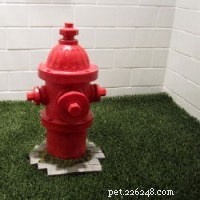
När du väljer en pottspot inomhus är det första du vill tänka på att du måste leva med lukten.
På grund av utrymmesbegränsningar är det inte alltid möjligt, men du bör försöka undvika platser som sovrum, områden där barn leker eller var som helst du lagar eller förvarar mat. Detta lämnar inte många alternativ!
Ideala platser är vilket lite använt rum som helst:ett extra rum, tvättstugan eller ett lite använt badrum.
Ett annat övervägande är ytan du placerar din hunds badrum på. För inomhuspotter som använder hundar finns det alltid risk för olyckor och missar.
Så om du kan, placera valpens badrum på ett kaklat eller linoleumgolv. Eller om det måste vara i en matta, lägg en plastduk under toaletten för att skydda ditt golv och göra städningen enklare.
Det finns många alternativ att välja mellan att använda som pottspot inomhus. Torvlådor, ströbrickor, några nya har till och med dränering som samlar upp avfallet i lagringstankar...listan är nu nästan oändlig.
Så vilket ska du välja?
Personligen tränar jag alltid mina hundar att potta utomhus och tillhandahåller inte en permanent inomhustoalett för dem.
Därför har jag aldrig övervägt gräslådor eller ströbrickor, utan väljer istället att använda papper och valpunderlägg om jag måste lämna dem hemma ensamma längre än de kan hålla i blåsan.
Men om du behöver göra ett val:Vilka är fördelarna och nackdelarna med var och en?
[amazon fields=”B01MPWFYZA” value=”thumb” image_size=”large” tracking_id=”labradortraininghq-20″ image_class=”ais200fr”] Valpdynor är mycket absorberande och kan placeras i en bricka med upphöjda kanter, vilket minskar spill och städar relativt lätt.
De är ofta genomsyrade av en doft för att locka en valp att eliminera på dem så att de kan hjälpa till att påskynda träningsprocessen lite. De ser också bättre ut i hemmet än ett område täckt med papper (något).
Nackdelen är att de inte täcker ett så stort område som papper kan och jag har hört historier om hundar som lär sig att tycka om att riva dem i bitar, men det är sant för det mesta antar jag!

Papper är väldigt billigt och om du använder gamla tidningar är det nästan gratis! Så du kan täcka ett stort område till mycket låg kostnad medan din valp är ung och oerfaren.
Urin rinner dock ofta av papperet innan det blötläggs in, så spill är vanligare och svårare att städa upp. Dessutom kan vi lättare blötlägga papper till golvet under, även om du kan använda en bricka som med valpdynor om du vill.
Slutligen är det väldigt lätt för din valp att riva sönder papperet och sprida det där en kudde är mer innesluten när den fastnar i en bricka.
[amazon fields=”B00G7RMCHO” value=”thumb” image_size=”large” tracking_id=”labradortraininghq-20″ image_class=”ais200fr”] En ströbricka är lätt att rengöra med högabsorberande skräp som suger upp avfallet och håller allt väl inne på brickan. Det ser också bättre ut än en spridning av tidningar.
Men de största problemen med skräp är att vissa hundar ser det som ett mellanmål, det kan gå ut ur brickan och trampas runt i huset när det sitter fast vid tassarna och gud förbjude att du har en hund som försöker gräva ner sitt avfall!
[amazon fields=”B002DCWA4C” value=”thumb” image=”2″ image_size=”large” tracking_id=”labradortraininghq-20″ image_class=”ais200fl”] Gräslådor finns med äkta gräs eller syntetalternativ.
De fungerar bra eftersom de ser så annorlunda ut mot det omgivande golvet att en valp lätt kan urskilja det som ett pottområde, din hund får en mjuk gräskänsla under fötterna och de gör ett bra jobb med att hålla allt inneslutet.
Nackdelen är att de är de dyraste av de tillgängliga alternativen och vissa hundar utvecklar vanan att försöka gräva och tugga i gräsmattan som de skulle göra med en bit gräs utanför.
Jag rekommenderar att du använder tidningar med en mycket ung valp, begränsad till ett enkelrum med ett lättstädat golv.
När din valp är van vid att gå på papperet, klipp av det täckta området till storleken på bara ett par ark, placera sedan valpdynor i en bricka ovanpå pappret och uppmuntra din valp att använda detta.
Papper är så billigt att du kan använda det i överflöd med en ny valp tills den åtminstone är halvtränad, och sedan byta till valpunderlägg så att rengöringen blir enklare.
Om du bara behöver använda en pottspot inomhus med din mycket unga valp tills de mognar, lära dig lite kontroll av urinblåsan och sedan använda utsidan uteslutande, skulle jag aldrig överväga en gräslåda eller bricka.
Men om du tänker använda ett inomhusbadrum på lång sikt, kanske du vill överväga gräslådor, ströbrickor eller till och med en av de mer moderna och kreativa inomhustoaletter som finns.
Det finns några moderna hundstolar tillgängliga som bara behöver städas varje vecka, några som eliminerar lukter och många som ser bättre ut än papper eller valpdynor som ett permanent inslag i ett hem, så du kanske vill undersöka några av dessa alternativ.
Det finns fyra allmänt använda och rekommenderade metoder du kan välja mellan, även om verkligheten är att du nästan säkert kommer att använda en blandning av två eller fler.
Dessa metoder är:
I resten av den här guiden kommer jag att hänvisa till var och en av dessa fyra metoder och när du bör eller skulle kunna använda dem.
För att vara säker på att du har ett anständigt grepp om vad varje metod är och vad de innebär, kommer jag att ge en kort sammanfattning av varje metod.
Jag kommer också att länka till mer detaljerade artiklar jag har skrivit om varje metod för dem som vill ha en mer detaljerad förståelse.
 © Depositphotos.com / agencyby
 Pappersträning är den mest kända och mest använda metoden för hemmaträning i hela världen.
Här är en kort sammanfattning av tekniken:
Beskrivning: Pappersträning är att lära din valp att gå på toaletten inomhus på ett stort område med tidningar eller förbehandlade valpunderlägg som uppmuntrar en valp att använda området som badrum.
När du är van vid att använda papperet eller kuddarna skär du långsamt av det täckta området tills de på ett tillförlitligt sätt använder bara ett par ark och missar aldrig.
Du flyttar sedan långsamt papperet mot utsidan där ett annat set är placerat och du börjar uppmuntra din valp att bara gå ut innan du helt tar bort papperna inuti. Vid det här laget kommer de att ha gjort övergången.
Ett topptips när du tränar papper är när du städar bort smutsigt papper, du bör hålla tillbaka en bit och lägga den som ett mellanlager av de nya papperen.
Valpdynor har en doft som attraherar en valp, det gör inte papper.
Men genom att hålla tillbaka en bit lätt smutsad papper med doften av din valps urin, får du samma effekt att locka din valp för att eliminera var du vill.
Effektivitet: På en skala från 1 till 5 ger jag den en 3.
Den kan inte få högre poäng eftersom du tränar dem till toaletten inuti innan du tränar om dem att inte göra det! Detta är förvirrande och kommer att göra att inlärningsprocessen tar längre tid.
Det leder också till att misstag (potta inuti) görs långt senare i en valps liv jämfört med de andra metoderna, särskilt när de ser papper som har blivit liggande.
Bäst lämpad för: Antingen människor som ska ha en inomhusbadrumsplats på lång sikt eller personer som inte kommer att använda en låda för träning ännu inte kan åta sig att ständigt övervaka sin valp när de är inne i hemmet.
Men det är också en bra reservplan för alla att använda när de måste lämna sin valp hemma ensam längre än de kan förväntas hålla i blåsan.
Användarvänlighet: På en skala från 1 till 5, definitivt en 5.
Det är en mycket enkel metod att använda, som kräver minsta möjliga ansträngning från dig jämfört med någon annan teknik.
Men det resulterar i fler misstag från din valp till senare i livet. Så du kan vara mer passiv och mindre involverad i början, men kommer att ha mer att städa senare i valpens liv jämfört med andra metoder.
Utrustning som behövs: Inget annat än högar med gamla tidningar! En mycket kostnadseffektiv metod.
Ytterligare information: För en detaljerad diskussion om pappersträning, för-, nackdelar och några experttips, se följande artikel:Hur man papperstränar din valp eller hund på ett enkelt sätt
[amazon fields=”B001DRY8Z2″ value=”thumb” image_size=”large” tracking_id=”labradortraininghq-20″ image_class=”ais200fl”] Att använda en låda är det effektivaste och enklaste sättet att påskynda träningsprocessen i huset.
Beskrivning: Metoden utnyttjar det faktum att hundar har en naturlig instinkt att inte smutsa ner området där de äter och sover.
Nyckeln till detta är att göra lådan precis stor nog att stå i, vända sig lätt och lägga sig utsträckt men inte större.
En valp eller hund kommer då att "hålla den" så länge de kan för att undvika att lätta och sedan behöva lägga sig i den.
En stor fördel med detta är att en valp lär sig när den är mycket ung att bara för att de har en lust att pysa eller bajsa, behöver de inte och kan faktiskt hålla den. Med andra metoder lär sig en valp inte detta faktum när han är så ung.
Du lägger inte din valp i låda hela tiden, det skulle vara grymt.
Du packar dem bara när du inte kan titta på dem, är upptagen i hemmet eller kanske borta från hemmet en kort stund. Resten av tiden tittar du på dem och tar dem regelbundet ut på pottan för att lära dem goda vanor.
Effektivitet: På en skala från 1 till 5 ger jag den en 5
Jag säger att det är den mest effektiva metoden jag vet eller någonsin har läst om. Valpar lär sig rätt beteende snabbare än med någon annan teknik och det blir färre misstag (och mindre städning!) på vägen.
Bäst lämpad för: Alla! Jag rekommenderar starkt att du använder en låda under husträningsprocessen eftersom det är så effektivt.
Användarvänlighet: På en skala från 1 till 5 skulle jag säga en 3.
Det är lättare än konstant övervakning, svårare än pappersträning. Detta beror på att du måste träna din valp innan du kan använda en låda för hemmaträning, vilket tar tid och ansträngning.
Klicka här för min kostnadsfria och detaljerade guide för att träna din valp.
Utrustning som behövs: En lämplig låda. Jag har en guide som hjälper dig att välja rätt storlek och typ som du kan läsa genom att klicka här.
Ytterligare information: För att läsa en detaljerad diskussion om användningen av en låda för hemmaträning, läs:Hur man använder en låda för att husträna en valp
Den här artikeln tar upp varför metoden är så effektiv, hur den drar fördel av 3 av din valps naturliga instinkter, väger upp några för- och nackdelar och mycket mer.
 © Depositphotos.com / agencyby
 Beskrivning: Det är som det låter:Du spenderar all din tid med din valp och övervakar dem hela tiden.
Varje gång du ser skyltarna som de håller på att potta tar du upp dem och tar dem till deras badrumsplats.
Effektivitet: På en skala från 1 till 5 ger jag den preliminärt 3.
Det kan faktiskt få högre eller lägre poäng beroende på hur engagerad du är och hur framgångsrik du är i att övervaka din valp.
Men jag har gett den en 3:a för oavsett hur goda dina avsikter är, oavsett hur uppmärksam du är på tillsynsuppgiften, kommer du att svika din vakt och din valp kommer att kunna smyga iväg för att göra misstag.
Av denna anledning är det inte lika effektivt som lådaträning och kommer att ta längre tid, vilket säkerligen resulterar i fler "olyckor" längs vägen.
Bäst lämpad för: Människor som är emot någon form av instängdhet och kan stanna hemma för att titta på sin valp hela dagen varje dag. Mest folk som jobbar hemifrån och pensionärer.
But this method also forms a part of every house training plan, whether you use other methods alongside or not. This is because when a puppy is free inside a home, they MUST be closely supervised to prevent any mistakes.
Ease of use: On a scale of 1 to 5, I give it a 2.
It scores low as it requires a lot of input from you as the owner. You need to concentrate on your puppy at all times, ready to intervene and correct them any time they’re about to potty where they shouldn’t.
It is quite draining never being able to take your eye of your puppy.
Equipment needed: Inga. Ingenting. Not a crate, newspapers, puppy pads or anything. The cheapest of all the methods…unless you put a price on your time.
Further Info: For more information on the constant supervision technique, please read the following article:House Training WITHOUT A Crate:Constant Supervision
 © Depositphotos.com / andresr
 This is a little used technique, and at first may sound a little silly. But it is highly effective.
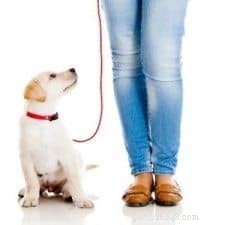
Description: This technique calls for you to tether your puppy to you by leash and have them follow you wherever you go when inside your home.
This way they’re never more than a few feet away and have no chance to sneak off unnoticed to potty where they shouldn’t.
You will notice and be able to intervene and correct every possible mistake, taking them outside every time they need to relieve themselves.
Effectiveness: On a scale of 1 to 5, I’d say it’s a 5.
Used correctly, the opportunity for your puppy to make mistakes is completely removed so every single time they need to visit their bathroom spot is a training opportunity you will take advantage of and no mistake goes uncorrected.
Best suited to: People who spend all their time at home with their puppy and would also enjoy literally being tied to their pup all day.
It’s also a good method to throw into the mix for people who’ve found difficulty with ‘constant supervision’ and allow their puppy to sneak off and have accidents in the home, helping them to get better results.
Ease of use: On a scale of 1 to 5, I’d say a 4.
It’s easier than constant supervision as your puppy is attached so you can relax a little in comparison.
It’s easier than using a crate because you don’t have to crate train your puppy. But it’s not as easy as paper training which is very hands off for an owner.
Equipment needed: A quick release collar and a house line / leash.
Further Info: for a detailed discussion of this technique, the benefits, downside, and many more tips, please see my article:Umbilical Cord House Training:What is It? How Does It Work?
I use and recommend a mixture of crate training, constant supervision and paper training.
I primarily use crate training as I firmly believe it’s the most effective method and I’m also a strong believer in the idea that every dog deserves to be crate trained to enjoy the continuous benefits it offers throughout their life.
I use constant supervision extensively because when a puppy is outside of the crate you have to watch them diligently to avoid puppy mistakes.
I use paper training while my puppies have almost zero bladder control until the age of 10 or 11 weeks, and later in life when I can’t avoid leaving them home alone for longer than they can be expected to hold their bladder.
Admittedly this is somewhat going against my advice because I always recommend to avoid paper training if possible.
It encourages or allows your puppy to toilet inside the home, before then training them not to do so. It’s saying it’s OK, before turning full circle and saying that it’s not.
This is confusing to your puppy and harmful to our house training efforts. (Unless you’re going to have a permanent indoor bathroom spot of course, then this method is perfect.)
But even though I recommend against it, using paper training ever so occasionally as a fall back plan works well for me.
I explain more fully why and when I use paper training in later sections of this article on ‘House Training For Full Time Workers ‘, and ‘A Note On Puppies Between 8 And 12 Weeks ‘
 © Depositphotos.com / andresr
 Though not essential, it’s extremely useful to train your dog to eliminate on command.
When you’re in a hurry and need to leave in the morning, or it’s right before bed time, these are times you will wish your dog would eliminate on command rather than you having to patiently wait for them to do their job.
Most dogs love being outside and will use any excuse to get out there and stay there.
So it’s of benefit if you can clearly tell them you’re going outside to toilet only and for nothing else, that there’s no chance of exercise or play. If they don’t potty, they’re coming straight back in.
You do this by using a cue word and walking them on leash to their potty spot, not allowing them to do anything else and if they do not potty, taking them back inside and trying again in a few minutes.
Because a full bladder or bowel is uncomfortable, dogs are happy to relieve themselves, but some may try to hold it if they think they can get to stay outside and sniff around a while.
By not allowing this and associating it with a consistent command, it will only take a few short weeks for them to learn your chosen command means a bathroom break only and that if they don’t go, they’re coming straight back inside uncomfortably full.
If this is something you’d like to train, it’s important that you choose the words to use before you start the training and make sure everybody uses the same words consistently.
If people use different words, your dog will get confused.
So pick a command like ‘toilet time ‘ that you will only use when you’re taking them to the bathroom and you will not allow them to do anything else.
You’ll have a different word like ‘walkies ‘ for other more fun times outside and your dog will eventually learn the difference and set their expectations of their time outside accordingly.
Once outside you can use another command like ‘potty’ or ‘do your job’ to ask them to do their business.
For the first weeks you should wait for them to start doing their business and then use the word ‘potty’ to build an association. And praise them afterwards with ‘good potty’. This will slowly teach them the command.
Eventually your dog will learn ‘toilet time’ means a quick bathroom break only, and ‘potty’ is you asking them to go.
OBS: For a very good guide on training to eliminate on command from the ‘Whole Dog Journal’, please click here.
A quick word of caution: Don’t use a word for your elimination command that gets used at other times. For instance, many people use the words ‘hurry up!’, but if you say this to your spouse when heading late out the door, this could get very messy if your dog hears and reacts.
When your puppy’s very young it’s easy enough for you to scoop them up and carry them to their bathroom spot. And this is fine for the first couple of weeks while they have no bladder control and will perform their business very quickly.
But once they start to learn some bladder control, if you take them to potty without them being on leash, as soon as they hit the outside there’s all the sights, sounds and smells that can take over their inquisitive minds.
They easily forget what they’ve gone outside for and will romp and play in your yard instead, before going back inside still full. And some dogs even learn to actively hold their bladder just so they can stay outside to explore for longer.
So it’s in your best interests to lead them on leash to their bathroom spot and keep them there until they complete the job in hand.
Before you can do this you need to first get your puppy used to wearing a collar and leash. To help with this I’ve written a detailed guide that you can read by clicking here:How To Get Your Puppy Used To A Collar And Leash
Start this process at 10 weeks, and always lead them on leash from the 11th or 12th week. You may regret it with lots of time waiting outside if you don’t!
Like everything in life, house training runs smoother if you have everything ready before you start, hopefully before you even bring your puppy home. Although it’s never too late of course!
To help make sure you’re ready, here’s a checklist to cross off and make sure you have everything prepared. Have you:
With all this ready and in place, you’re now ready to begin house training your puppy.
Dogs thrive when living to schedules and routine, doing best when they have set times for eating, going to toilet, exercise, training and play.
And when it comes to house training, you’re going to love schedules and routine too!
If you feed your puppy at random times throughout the day, they’ll need to defecate at random times throughout the day.
They won’t fall into any predictable schedule and your life will be that much harder.
But because the passage of food through their digestive system stays roughly the same, if you feed your puppy at the same times every day they will need to defecate at roughly the same times every day.
Furthermore, because puppy’s learn through repetition, by taking yours out to potty at the same times every day, their body learns to expect and follow this schedule, training your puppy to toilet at the times you’d like them to.
When you know the times your puppy needs to eliminate you can have them at the right spot at the right time with a far greater success rate than if you didn’t follow a routine.
This results in fewer mistakes, more opportunities to praise your puppy for going in the right place and so speeds up their learning.
Depending on their age a puppy will need to poop 3 to 6 times a day, and wee many more times than that. Can these times be predicted? Mostly they can.
When a puppy needs to potty depends on when they last ate, drank and their recent activities. Mostly they need to go:
But a puppy also needs to go many times per day regardless of recent activities, so you should also take your puppy to their bathroom spot on a consistent schedule such as the following:
This is only a guideline because all puppy’s are different. And on that note…
Not all puppies are the same. Some will need to wee within 2 minutes of drinking, others after 20 minutes. Some will need a bathroom break within 2 minutes of waking, others 15 minutes later.
This means there isn’t a ‘one-size-fits-all’ schedule I can give that’s suitable for every puppy and owner. You have to determine your puppies own natural tendencies and create a schedule to suit.
This may sound like a lot of work but it really isn’t once you get in to the routine. And besides:
Once you’ve determined your puppy’s natural rhythms, you can be at the bathroom spot at the correct times more accurately which is of huge benefit to both you and your puppy, so it’s highly worth doing!
But if you fear living to strict schedules is too hard to do…don’t fear! You don’t have to stick to them 100% of the time.
The more you can stick to schedules and routines, the smoother and faster the process will be. But you can stray from the path when necessary and still find success, it will just take a little longer.
Just don’t be overly strict and hard on yourself because we all have a life to live outside of house training!
So let’s go through the 5 steps of creating your puppy’s schedule.
 © Depositphotos.com / zzve
 Follow this 5-step process to create a schedule that works with your puppy’s natural rhythms and fits with your lifestyle and commitments.
Keeping and following a written schedule may seem odd or a bit excessive, I’m sure you’ve not seen many people bother with it?
But I promise you it’s not much work, after a couple of days practice it becomes a simple routine, the time it takes is negligible and the results are phenomenal.
Depending on how old they are, your puppy needs feeding between 2 and 4 times a day. Here’s a guide to how often and when you should feed them:
You should feed your puppy 4 times a day until 12 weeks old.
To achieve this you need to feed them every 4 hours and you should make it the same time every day, fitting it into a schedule that’s best for you.
A good routine would be to feed ‘breakfast’ when you first get up, at 7:30AM, then at 11:30AM, 3:30PM and 7:30PM.
You should feed your puppy 3 times a day when 12 to 26 weeks old.
The timings for 3 feeds a day would be roughly every 6 hours:7:30AM, 1:30PM and 7:30PM.
From 26 weeks old and onwards, feed your puppy just two times a day
For 2 meals a day you need to space them out 8 to 12 hours apart.
What works for me is shortly after I get up at 7:30 and when we have our evening meal between 6:15PM and 6:45PM.
Availability Of Water:
You should make sure fresh water is always available but because drinking too much or too little can be a sign of health problems, you do need to monitor their water intake.
© Depositphotos.com / Madrabothair Physical activity has a direct influence on a puppy’s potty schedule because it ‘helps things move along’ for want of a better expression.
Physical activity often leads to a puppy needing to potty very soon after. So to encourage predictable potty times for your puppy, you want to schedule their exercise and play.
This will help your puppy’s mind and body to slip into a routine that will help you both with the house training process.
Deciding when to exercise, train and play with your puppy is entirely up to you. You should fit it around your lifestyle and commitments, but try to make it the same times each day if you can.
If you’ve followed the guide so far, you’ve now gathered all the information you need to design your puppy’s house training schedule.
Enter all the following details into a single column in an excel spreadsheet, or write them down as a day schedule with a pen and paper:
After writing down this schedule, tick off each task as you go through the day with your puppy.
This way you will always know what needs to be done and when, and there will be no confusion about whether someone else in the house fed, exercised or took the puppy to the loo.
If it’s not crossed off the schedule, it hasn’t been done.
 © Depositphotos.com / Gajus-Images
 Alongside the schedule you’ve designed, add some columns where you can take notes of your puppy’s bladder and bowel movements, as well as their daily activities.
You do this because it’s important information you can use to design an ever more accurate schedule going forward. (I discuss this further in step 5 below.)
The things you should write in your diary are:
Basically, note down anything food, activity, accident or potty related so you can look for patterns to help you in the next step.
Look over any ‘accidents’ your puppy had and you noted during the day.
You should be able to pick up on any patterns and adjust your own behavior to avoid mistakes in future.
Was puppy left alone and peed in the living room while you made breakfast? – You need to increase supervision or make doubly sure you crate them when you’re busy.
Puppy should never be left alone unsupervised, learn from this mistake.
Or maybe puppy peed in the crate after an hour? – You left them crated longer than they can hold their bladder, or didn’t empty them before crating.
Learn from this mistake.
Look over how long they took to potty after being taken for a scheduled potty break
Did you catch them ‘in the act’ 3 times in a single day? Well done for watching them closely enough.
However, if they tried to go 3 times in the home, you’ve learnt that you likely aren’t taking them to empty themselves often enough. So increase the frequency.
Or perhaps the opposite happened and you noted that 3 times in the day you took puppy for a scheduled bathroom break, they didn’t go and you returned them inside for 15 minutes before trying again?
This shows your puppy is maturing fast, doesn’t have to potty as often as you thought and can last longer between potty visits than you’re allowing.
Therefore you should stretch out the time between visits by 10 to 15 minutes for the following day.
Look over how long after eating they pooped
If you see puppy didn’t potty for 20, 15, 20 and 20 minutes after their meals of the day, with this information you learn it’s pointless to take them to their potty spot until 15 minutes after they finish eating.
Some puppy’s go 2 minutes after eating, some after half an hour. This is how you find out.
By writing out the schedule as in step 3, you should never forget to feed, train or take your puppy to potty. If it’s not marked off on the schedule, it’s not been done.
And by using the schedule as a diary as in step 5, you get feedback on how you and your puppy are performing, and are armed with the necessary info to make changes to your schedule over time.
This helps you to truly match your puppy’s natural rhythms and their maturing and changing body.
You, your puppy and their needs all stay in sync and house training becomes that much easier.
 © Depositphotos.com / ccaetano
 For ease of use, I recommend simply keeping a written diary with good old-fashioned pen and paper.
We’re all in the electronic age surrounded by smart phones and i-Pads, but this is simply too much hassle and will likely lead to you not bothering if you have to power up a device and so on to make an entry.
Just make a spreadsheet in excel and print it out, or simply buy some lined paper.
Keep it somewhere you can always see and know where it is, alongside a pen or pencil and write entries in it as you watch your puppy throughout the day.
Next to your house phone, pinned to the fridge or by the exit to your puppy’s bathroom spot is a good place to keep it, but put it wherever is best for you.
When you first get your puppy home at 8 weeks, they can barely control their bodily functions so keeping a diary isn’t perhaps that helpful but I still recommend you do so, to get yourself into the habit.
I would recommend keeping a diary every single day until you’ve determined a definite pattern and have spotted their individual ways. Up until they’re 14 weeks old is a good target.
After this, continuing with a diary every day is the best advice, although keeping one for 3 consecutive days each week will be sufficient for you to pick up on any changes as they mature.
Once your puppy is 5 to 6 months old, they will have sufficient bladder control and experience to make a schedule and diary unnecessary.
Just make sure they get access to the outside at least once every 3 hours and all will be fine.
I discussed earlier how a puppy will need regular visits to their bathroom spot, something like every 30 minutes at 8 weeks old, every 45 minutes at 10 weeks old and so on.
But every puppy is different and their progress in having longer time between needed toilet breaks will vary too.
Although your puppy’s natural progression reflects in your diary and your schedule will adjust to suit, you should purposely try to increase the time between breaks yourself if it doesn’t happen naturally.
If you don’t see a natural increase of time between eliminations, add 5 minutes to the scheduled times every 3 or 4 days to stretch out how long they can last.
If they can’t make the time, peg it back 5 minutes and try to increase the time again in a further 3 or 4 days.
You do this because as a puppy grows, the size of their bowel and bladder increases, so they will be able to hold more for longer and you want to take advantage of this.
This is also teaching them necessary bladder and bowel control.
Your aim is to have them needing a toilet break only every 4 hours or so by the time they’re 5 to 6 months old.
In an ideal world, when you take your puppy to potty they will empty themselves completely and instantly, with no delay and not holding any back to release as soon as they’re back in your home.
There are a few things you can do and some that you certainly shouldn’t that will help you to achieve this goal.
Use your cue word before you take them: By using your chosen cue word every time before you take them to potty, your puppy will learn what the trip is about and what they must do. This eventually leads to faster results as they know what is expected of them.
Lead your puppy to the bathroom spot on leash: This gives you the ability to keep your puppy at the bathroom spot and prevent them wandering off, getting distracted and forgetting what they are there for.
This isn’t always possible if you catch them in the act and must hurry, but for scheduled bathroom visits you should always aim to take them on leash.
Make sure you stay with them at their bathroom spot: If you have them on leash, then of course you will be. But if you don’t have them on leash, make sure you stay with them because the separation will just make your puppy anxious to get back with you and they will not potty.
Once at the bathroom spot, don’t say or do anything until they start to eliminate: Puppy’s get distracted very easily and any attention can take their mind off the job in hand. Be boring, uninteresting, and just hold your puppy’s leash until they start to go.
When they start to go, say your chosen cue word in a soft warm voice. Otherwise remain silently still until they’re finished: You need to associate your cue word with the act, but if you say it too loud and brightly, it may distract them and they won’t finish.
Similarly, any other movement or sounds like praising them too early or shuffling your feet might distract them and they might not finish what they’ve started.
If they don’t finish and completely empty themselves, they may finish inside your home and even if they don’t they will not be able to make it to the next scheduled bathroom break so an accident in the home is more likely.
When you’re sure they’ve finished, praise them like mad and reward them: You should heartily praise your puppy for going in the right place, then allow them a few minutes off leash, a couple of minutes play or a tiny (and I mean tiny!) but tasty food treat.
The praise and reward make going to potty a happy experience, tells them they’ve done right and helps them to learn more quickly.
Mix up the reward between play, time off leash and a food reward to keep them guessing, but keep the food rewards to a minimum as what goes in must come out and random feeding promotes random elimination times!
 © Depositphotos.com / c-foto
 First of all, make sure you’ve spent enough time out there.
Many people pop out, stand for 1 minute and then come back in. This isn’t enough as a puppy can only go when they need to go and they may not be ready.
Some people recommend to stay out there for 10, 15, 20 minutes, whatever it takes until they go, then praise profusely when they do. Although this advice may be sound, personally I’d rather not.
I recommend you give them 3 to 5 minutes, saying your cue word every 30 seconds or so but otherwise standing silently still just holding their leash so they cannot wander off.
If after 3 to 5 minutes they haven’t been to toilet, bring them back inside your home and then:
If using constant supervision: Set them down in your home and continue watching them to intervene in case they make moves to go in the wrong place. Take them back to their bathroom spot in 10 minutes or so.
If using a crate for house training: Pop them back in the crate and leave them for 10 minutes. Then take them back to their bathroom spot.
If using umbilical cord training: Take them back into your home and watch your puppy carefully while they’re tethered to you by leash. Take them to their bathroom spot after 10 minutes.
If paper training: If they are confined to the area that’s papered, do nothing. If not, take them away from their bathroom spot and watch them for 10 minutes before returning them to their bathroom spot.
In all cases, just remember you’ve brought them back in with a full bladder so you mustn’t take your eye off them if free in your home.
And if crate training, do not leave them in the crate too long else they may be forced to soil in there. Prevent this at all costs.
Rinse and repeat the visits to and fro like this until they do potty, then follow the next sections advice.
Between scheduled bathroom visits you should do two things:Allow some supervised free time in your home, and use your chosen house training method.
 © Depositphotos.com / ikostudio
 After returning from the bathroom spot you should grant your puppy some free time in the room where you spend most of your time, up until 20 to 25 minutes before their next scheduled bathroom visit.
By free time I mean time outside of their crate, or off leash, or out of their confinement area. Time free to roam, explore and live life.
When 10 weeks old they may need to toilet every 30 minutes, so they only get 5 to 10 minutes free time. When 12 weeks old, they may need to toilet every hour so they can get 35 to 40 minutes free time.
You allow this free time because you are of course working toward a time when they will always be free and trusted unsupervised.
To get there they need the experience, to get used to being free in your home and begin seeing it as a place they need to keep clean.
They also need social interaction and life experiences.
The best time to grant this free time is right after a bathroom visit so you’re fairly sure they’re empty and are far less likely to make a toilet mistake in your home.
The important thing to remember is:
When your puppy is free in your home in this way, you must know exactly where they are at all times and be watching them like a hawk, ready to intervene if they look like they’re about to potty where they shouldn’t.
But what are the signs a puppy is about to potty?
When supervising your puppy’s free time, the signs you need to look out for that they need to eliminate are:
The minute you see any of these signs you should take your puppy to their bathroom spot immediately. There may well be some false alarms, but better safe than sorry.
Most puppies will display one or more of these pre-elimination behaviors, but no two puppies are the same so you need to be observant and learn your own puppy’s pre-toilet rituals.
Carefully watch them and you should soon notice what body language means a wee or a poop is imminent. There will be recognizable signs.
 © Depositphotos.com / AOosthuizen
 Once your puppy has enjoyed some free time and it’s nearing 20 to 25 minutes before a scheduled potty visit, you need to switch to using your chosen house training method.
We do this because the time is fast approaching when mistakes are most likely to be made. So we might crate our puppy, or attach a leash for umbilical cord training if we’re using these techniques.
Remember, all free time is closely supervised anyway so you’re ready to react if they’re about to ‘make a mistake’, So..
If using constant supervision: Carry on as you are. Watch your puppy and be ready to react if they look like they’re about to potty. Then at their scheduled potty time, attach a leash and lead them to their bathroom spot.
If using a crate for house training: Encourage your puppy into their crate and close the door, leaving them there until their scheduled potty time and then release them, instantly attaching a leash and leading them to their bathroom spot.
If using umbilical cord training: Attach a leash and tether your puppy to you, ready to react if they make moves to eliminate. Take them to their bathroom spot at the scheduled time.
If paper training: Take your puppy to their confinement area where their papered bathroom spot is and supervise them, ready to intervene if they make moves to potty away from the paper. Encourage them to potty at their scheduled time if they don’t do so naturally.
If you catch your puppy pottying in the wrong spot, you should simply clap your hands and say a firm ‘NO!’. You don’t want to shock and scare them, just loud enough to startle and get their attention.
It’s very important you DO NOT scare them as they may become afraid to potty in front of you. Not good when you need to be there to encourage them for doing it in the right place.
When you clap and say ‘NO!’, some puppies will stop what they’re doing, but others may not.
If they do, you can pick them up and carry them, or take them by the collar and gently lead them to their bathroom spot, then encourage them to finish where they should.
But if your puppy doesn’t stop mid-flow, my advice is to accept the fact you’re too late, you didn’t recognize the signs they needed to potty (or weren’t watching them closely enough) and you should let them finish and then clean it up.
Many people recommend to pick your puppy up and take them outside even if they don’t stop. But to me this seems foolish.
Instead of a little pile or puddle, you then have a long line of wee or poop from where you caught them all the way to the bathroom spot that you then have to deep clean instead. To me this isn’t worth the extra cleaning effort.
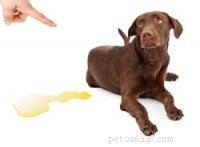 © Depositphotos.com / adogslifephoto
 There is nothing you can do.
You’ve missed the opportunity to correct your puppy and anything you do now your puppy will be unable to connect to the act of pottying in the wrong place.
If you get angry, shout at or punish them in any way, they might ‘look guilty’ trying to appease you, but they will have no idea what it is that’s driven you mad. They’re just trying to calm the situation.
And what sometimes happens is a puppy learns that poo on the floor is what you’re mad about, causing them to slink away to poo where it’s hidden, or worse they may even eat it so you don’t see it and get mad.
So if you stumble on a mess you didn’t catch them make, simply move them away and deep clean the area.
Then think how they were able to make such a mistake and tweak your plans so it cannot happen again. But any corrections or punishment now will be futile.
This advice applies not just to full-time workers, but also if you must occasionally leave your puppy home alone for a few hours.
Most importantly, follow all the advice in this guide so far for the times that you are home.
Supervise them, correct any mistakes, set feeding and elimination schedules and everything else I have advised. Then, what follows are your choices of what you can do to cover when you aren’t at home.
First of all, if like me you use a crate, you simply cannot leave your puppy in the crate for many hours. They’ll be forced to potty in there after a very uncomfortable time trying to hold it for as long as they possibly can.
This is very unfair on your puppy and it will destroy the crates power as a house training tool if they lose the instinct to keep it clean.
Secondly, please do your best to enlist the help of a family member, friend, neighbor or hire a dog walker to periodically pop in to visit your puppy, take them to their bathroom spot, give them some social interaction and so on.
I understand this isn’t possible for all owners, but you should strive to achieve this if possible.
Having said that, what should you do about house training when you aren’t at home:
Throughout the many articles of this guide you will have read me advising against paper training unless you’re planning on a permanent indoor bathroom spot for your dog.
But I also freely admit to using paper training myself occasionally, for the unavoidable times I have to leave my puppy home alone for a few hours.
If you have to leave your puppy home alone for any reason, usually because you work, then paper training in your absence is the only thing you can do.
You then have two options available to you:Buy and use an exercise pen, or confine your puppy to a single, puppy-proofed room.
[amazon fields=”B003XU0B62″ value=”thumb” image_size=”large” tracking_id=”labradortraininghq-20″ image_class=”ais200fr”] An exercise pen is a confinement device that looks like a crate but is much larger and has no roof. They can have any number of panels, be square, hexagonal, octagonal, L-shaped…they’re very flexible (an example 8 sided pen is in the image to the right.)
You use it to confine your puppy so you know they’re safe, as is your home and belongings from their teeth.
They’re big enough for you to paper an area inside to use as a toilet, while leaving space where you can set up your dogs bed, a water bowl and some chew toys and so on away from where they have to potty.
Initially use less than half of the confinement area for your puppy’s bedding, toys and water bowl, then paper over the remaining floor space.
As they get used to pottying on paper, reduce the area covered one sheet at a time until just a small area remains covered.
Once you know your puppy can hold their bladder for longer than they have to be left alone, remove the paper altogether.
By 16 to 20 weeks, they should be able to last the 3 or 4 hours max they will be left alone and somebody comes to exercise them and allow a bathroom break.
OBS: You should get your puppy used to an exercise pen by using the same techniques as crate training, so please refer to my guide to crate training puppies
[amazon fields=”B004RL1KPC” value=”thumb” image_size=”large” tracking_id=”labradortraininghq-20″ image_class=”ais200fl”] When I’ve had to leave a puppy alone, I confine them to a paper covered area of a puppy proofed room, with a puppy pad in a holder.
Between 8 and 12 weeks (when weeing seems spontaneous), my puppy spends a fair bit of time in there and I paper train them to use puppy pads.
Most recently, the room I used was basically our dining room, though it’s never used for that purpose and is essentially bare.
Our kitchen and dining room was separated by an arch where a door used to be, with tiled flooring, making it ideal.
I used a baby gate across the arch between the kitchen and dining room, and initially covered the dining area with paper, over time reducing it to just two sheets with the puppy pad holder on top.
The dining area is completely empty, with no furniture, nothing in there. So it’s as puppy proofed as can be. But a word of warning…
If you use this option and have any furniture or anything at all in the room, it’s likely it will be scratched and chewed! Skirting boards, the corners of furniture items, anything within reach is a potential target for teeth and claws.
My girlfriend works from home, we crate trained and we had no problem finding house sitters in an evening if we needed one, so we all but had things covered. But this is something you need to be mindful of.
So I recommend using an exercise pen if you’re going to leave your puppy alone often and there’s any chance of a room being damaged.
 © Depositphotos.com / feedough
 Regardless of the method of house training you choose, some form of confinement is almost always necessary, for the times when you really cannot watch your puppy.
And there will always be a time or two so it’s best to prepare in advance.
You may have an unexpected visitor or need to visit A&E in an emergency. Whatever the reason, there just WILL be times you cannot supervise your puppy.
If you’re using a crate, you have these times covered.
But if you’re against a crate for whatever reason and have chosen to exclusively use constant supervision or umbilical cord training, you will have to invest in an exercise pen or confine your puppy to a single room and use paper training.
The essence of house training is to prevent mistakes and praise your puppy heavily when they potty in the right place.
If you cannot watch your puppy, the chances of them making a mistake go through the roof.
So even if you choose to use a constant supervision method exclusively, you will still need to confine your puppy sometimes to a paper covered area just in case.
 © Depositphotos.com / domako
 You’ll likely find your 8 week old puppy has absolutely no bladder control. I mean literally none at all.
One minute they are trotting along, the next they are leaking. No warning signs for you, not even any warning signs for them. They just don’t know it’s going to happen themselves.
It’s not their fault, it’s just their immature bodies doing what they do.
During this time it’s foolish to allow them on your living room carpets for even a second.
I recommend setting up an exercise pen with the entire area papered, or do as I do and confine them to a room with the entire area papered.
Use this time to paper train them, to get them used to weeing on paper and gradually reduce the area because you will use this method if you ever have to leave them home alone during the next 4 or 5 months.
Some time between 8 and 12 weeks, your puppy will start to show some bladder control (usually 9 to 10 weeks) and will begin to show warning signs that they’re about to potty instead of instantaneously leaking. They will sniff, circle and so on as I mentioned before.
At this point you can now move on to using your chosen house training method.
I’m not saying when 8 weeks old you don’t house train them. Do! Start encouraging them to potty in the right place from the minute you get them home.
I’m just saying that it’s very hard when you have absolutely no warning for the first few days to a couple of weeks. Just don’t get mad at your puppy, it isn’t their fault and you should expect this.
A young puppy will not be able to last through the night without needing to potty. However, similar to humans a dog’s body slows down during the night and the need to toilet is severely reduced.
So the good news is, even at 8 weeks they will be able to last 4 or so hours and you will only need to wake once during the night.

Allow your puppy no food for 3 hours and no water for 2 hours before bed. Also, make sure to take them to their bathroom spot right before you go to bed so they can empty themselves.
Then set an alarm for 4 hours after their bed time when you must get up and take them to their bathroom spot. No excuses, you simply must do this.
If you find your puppy has soiled in this time, you should set the alarm for half an hour earlier the next night (3.5 hours). Repeat until you find you’re waking before they’ve had an accident.
After a few days of not having a night-time accident, set your alarm for 15 minutes later and increase the time by 15 minutes for each successful night they do not have an accident.
The time a puppy can last over night without needing to potty increases dramatically during their first few weeks so you’ll find this is OK to do.
If you find they make a mistake one night before you wake, set the alarm back half an hour, make sure they stay dry a few days and then increase 15 minutes nightly again.
Within a few short weeks you’ll find they can last a full 7 hours without needing a bathroom break.
And by using this schedule, you strike a good balance between a couple of inevitable accidents while stretching out the time at a good pace to lasting a full night.
It’s important that your puppy isn’t forced to eliminate in their crate as it can ruin their natural instinct to keep it clean, the very thing we take advantage of to help the house training process.
This is why I recommend if you find a mess you set the alarm for half an hour earlier, a reasonably big step back to where they’ve been successful at before.
If they soil their crate more than once in any given week, you may have to progress slower (add 15 minutes every 2 or 3 days), or perhaps sleep them in a papered exercise pen or their confinement room.
Maintaining their instinct to keep the crate clean is of utmost importance.
You should also consider consulting your vet to make sure it’s not a medical problem causing the mistakes.
When you take them out at night, say your chosen cue word, take them straight to their bathroom spot, praise them gently when they finish their business but do not reward them with anything else.
The last thing you want is to teach your puppy that during the night is a time for play or food treats!
This will come back to haunt you in a big way and result in noisy sleepless nights. You want your puppy to learn that night-time is for sleeping and for nothing else.
When the alarm goes off, collect them, take them to potty, praise with a simple, deadpan ‘Good potty! ‘ then silently take them back and return to sleep until the morning. Do nothing else.
No two puppies are the same. Some will be able to last the whole night without a potty break at 10 weeks (rarely), and some may not be able to at 15 weeks (also rarely).
But certainly by 16 weeks old your puppy will be able to last a 7 hour night without needing to potty if you do not feed them for 3 hours or provide water for 2 hours before bed time and allow them to empty themselves right before you lay down for the night.
 © Depositphotos.com / Nivens
 If you seem to be making little progress and your puppy is weeing and pooping randomly all the time, or just doesn’t seem to be developing bladder control, it could be due to medical reasons.
If you are feeding, exercising, training and playing with your puppy to a schedule, and when you look at your diary there seems to be no pattern to the times they need to potty, you should seek the advice of your vet.
Common ailments such as gastroenteritis, urinary tract infection and health issues affecting internal organs and the genitalia can lead to a dog needing to potty much more frequently, often leading to eliminating in the house.
Also, you should regularly check the firmness and consistency of their stools and if they’re too hard and dry, or soft and runny, there’s likely something wrong with their diet or a medical condition to blame. Again, seek the advice of your family vet.
You cannot successfully house train a puppy who is ill because their bodily functions will be too unpredictable. But of course if they’re ill, you want to have them back to good health anyway!
The simple answer is:‘When your puppy’s proven that they know to never soil inside your home.’
The average will be between 6 and 7 months old. The élite few may be some weeks earlier and yet others, particularly the smaller breeds, may take from 8 to 10 months. But 6 to 7 months is the ball park figure to aim for.
However, you have to be careful here and can’t judge it by a clock or calendar, you have to judge it by your puppy’s behavior and only stop when they have proven you can trust them.
A single mistake in the home can cause a major setback.
A puppy may not make a mistake for 2 weeks, then you give them too much freedom, they make a mistake and all of a sudden they are regularly trying to potty in the home again.
Also, some puppies just seem to forget everything for a few days now and then while growing up, even after being perfect for a couple of weeks.
Please remember this, expect it even, because it’s perfectly normal and you shouldn’t get worried or think your dog is being naughty. Just stick to your plan and they WILL eventually get it.
So anyway, it’s in your best interests to show caution and not be too hasty to end the house training process.
My advice would be to continue until they haven’t even attempted to make a mistake for at least 6 weeks so you can be sure they really have ‘got it ‘.
With house training, the fewer mistakes you allow your puppy to make and the more they are rewarded for doing the right thing, the quicker they will learn and the faster you will find success.
Because of this, the more effort you put in and the more time you spend with your puppy at the beginning – supervising to correct mistakes and taking them to their bathroom spot many times each day – the better.
But there are many other things you can do to help yourself and your puppy to find success. Setting up routines and schedules, controlling your puppy’s diet, understanding your puppy’s capabilities at different ages, working with their natural instincts and more besides.
This guide has provided you with all the theory, strategies, tips and tricks you will ever need to successfully house train your puppy as quickly and efficiently as possible, with the fewest mistakes along the way.
Put into practice what you’ve read within this guide and with a little patience and dedication you will be able to turn any puppy into a house training champion.
This was part 11 in a 12-part series where I’ve tried to provide all the guidance you could possibly ever need and covered everything I can think of for you to successfully house train your puppy or adult dog.
Please see the entire series linked to below:
This guide has taken me many weeks to put together so I’m hoping it will prove useful to people.
I would love to hear any feedback you have whether good or bad, so I can improve the guide over time and make sure it’s as useful as can be.
If you have any feedback, comments, questions or suggestions on how to house train a puppy, please add them to the comment section below and I will answer every one. Thank you :-)
For an entire website dedicated to House Training:www.TheHouseBreakingBible.com
For many example schedules for puppies of different ages, see:Housetraining from ‘The Academy’, Canada.
For a nice, detailed guide with some further tips and advice, see:How To Potty Train A Puppy, from ‘Fido Savvy’
For a list of all the supplies we get for our new service dog puppies check out our New Puppy Checklist on the PuppyInTraining.com blog.
